
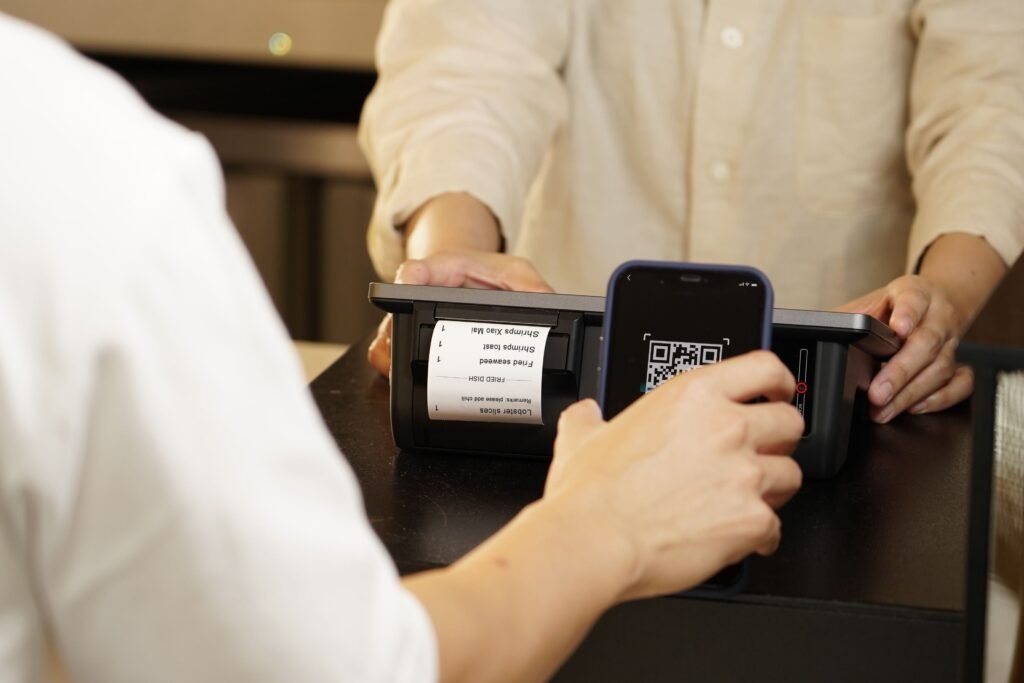
UPI has become a default payment mode in India. Whether it’s Kirana stores or large enterprises, everyone is now handling payments using the Unified Payments Interface. This has made cash secondary.
Did you know? In July 2026 alone, UPI processed 2,366 crore transactions nearly worth ₹30 lakh crore. Bearing in mind this massive scale, things are about to change. New UPI payment rules will soon be coming into effect.
The new UPI charges 2026 introduce a merchant discount rate (MDR) on select merchant payments.
Earlier, the new UPI MDR rules were supposed to come into effect from 15th October 2026. However, The National Payments Corporation of India (NPCI) has postponed the implementation of the Merchant Discount Rate (MDR) on UPI transactions to “immediately after Diwali”. While the exact date is unknown, the rollout has been deferred until Diwali. The NPCI said that the exact implementation date will be notified separately.
Assuming it will come into effect after 8th November 2026, things are going to change on specified person-to-merchant UPI payments above ₹2,000.
The question remains – what are the UPI charges for salon owners? How is this going to affect salon and spa businesses, and the wellness industry in general?
Key Takeaways
- Person to person transfers and merchant payments up to Rs. 2,000 remain free
- Eligible merchant payments above Rs. 2,000 will attract 0.4% MDR
- Customers will not be charged MDR directly. It is a merchant-side cost
- For transactions Rs. 75,000 and above, the MDR is strictly capped at Rs. 300
What is MDR?
MDR stands for Merchant Discount Rate. It is a kind of fee a merchant pays to a payment service provider, bank or acquiring institution for processing a transaction. There are two types of UPI transactions:
- P2P (Person to Person): This involves sending money to friends, family or individuals. No matter the amount, this kind of transaction is completely free.
- P2M (Person to Merchant): This involves paying a business, shop or service provider. This will be free up to Rs. 2,000 per transaction and above that threshold, the merchants will be charged a fee depending on the specified category.
Under the implementation of this new rule, the general P2M rate is 0.4%. This is in the P2M framework. However, as a salon or spa owner, the amount you pay entirely depends on the transaction amount and the overall volume of your business.
UPI MDR Fee Breakdown for Salon Owners
The UPI MDR changes after Diwali are as follows:
- Transactions up to Rs. 2,000: Everyday treatments like waxing, threading or haircuts remain completely free for merchants with zero processing fee. However, in certain luxury salons, haircuts cost beyond Rs. 2,000. In that case, 0.4% MDR will apply.
- Transactions above Rs. 2,000: 0.4% MDR will apply. This will be for premium hair spas, facials, bridal packages and so on. For example, if a bridal grooming package in your salon costs Rs. 5,000, the processing fee will be Rs. 20.
- Per-Transaction Cap: The MDR is strictly capped at Rs. 300. This is eligible on transactions above Rs. 75,000.
This framework takes effect immediately after Diwali.
A lot of beauty business owners wonder if every salon will have to pay MDR?
Well, not necessarily as merchant classification matters. Merchants above ₹1 lakh a month for three consecutive months get moved to the standard P2M category.
Steps Salon Owners Should Take Before the Change Comes into Effect
Before the UPI MDR change comes into effect, here’s a checklist for salon owners:
- Check with your bank or UPI provider if your merchant ID is covered by MDR
- Confirm which category your salon falls under. If it falls under P2PM category, and if your salon crosses 1 lakh a month for three consecutive months, MDR will be zero
- Take an assessment of an average UPI bill value in your salon or spa
- Do not pass on UPI MDR surcharge to customers
- Double check the rules before doing anything
Bottomline
For Indian salons, the UPI MDR will only apply on certain higher-value UPI merchant payments. It won’t be a blanket fee on every QR payment. Salons and spas have been prohibited from passing MDR on to customers.
The rollout has been deferred so that there is not an immediate cost burden on retail businesses and services. Until the NPCI notifies the new date, all UPI merchant payments continue under the current zero-MDR system.
Salons should check their merchant category before changing their pricing prematurely.
FAQs
- What are the New UPI Rules in India in 2026?
Immediately after Diwali specified UPI payments above Rs. 2,000 will attract an MDR of 0.4%. However, P2P and low-value merchant UPI payments will continue to remain free.
- Will UPI Transactions Become Chargeable for Customers?
No. Customers will and should not be affected by the UPI MDR changes. Only merchants under specific categories will be affected and only if the transaction exceeds Rs. 2,000.
- When does the UPI MDR Framework Come into Effect?
The new UPI MDR rules will come into effect immediately after Diwali. While the exact date is not known, it can be anywhere after 8th November 2026. The date will be notified in a separate announcement. It has been deferred and the 15th October start date has been postponed, not the MDR itself. Merchants can go on with their transactions as it was earlier.
- Does UPI MDR Apply to Salons?
Yes. If the salon is in the standard P2M category and the payment is above ₹2,000, the UPI MDR will apply. The exact implementation date is yet to be announced.