Table of contents
- Understanding Financial Year-End Salon Reporting
- Manual Salon Reporting: Process, Pros, and Cons
- Salon Management Software Reports: Features and Advantages
- Comparing Manual vs Software-Based Reporting
- Key Reports for Year-End Success
- The Role of Analytics Software and Dashboards
- Transitioning from Manual to Software-Based Reporting
- Making the Right Choice for Your Salon
Financial year-end reporting is a pivotal task for salon owners and managers. It provides a comprehensive view of the salon’s financial health. This process is essential for strategic planning and future growth.
Traditionally, many salons rely on manual reporting methods. These involve spreadsheets and paper records. While familiar, this approach can be time-consuming and error-prone.
In contrast, salon management software offers a modern solution. It automates the reporting process, saving time and reducing errors. This software provides real-time data and analytics, offering deeper insights.
A salon business reports dashboard centralizes data. It makes tracking key performance indicators (KPIs) more efficient. This can lead to better decision-making and improved business outcomes.
Choosing between manual and software-based reporting is crucial. It depends on the salon’s size, budget, and specific needs. Each method has its pros and cons.
This article explores both options in detail. It aims to help salon owners make informed decisions. By understanding these reporting methods, salons can enhance their operational efficiency and profitability.
Understanding Financial Year-End Salon Reporting

Financial year-end reporting is the cornerstone of evaluating a salon’s financial performance. It involves assessing income, expenses, and profitability over the fiscal year. This process is crucial for planning and compliance.
Key components of year-end reporting include:
- Income statements
- Balance sheets
- Cash flow statements
These reports provide a snapshot of the salon’s financial health. They help in identifying areas of strength and those needing improvement.
Comprehensive financial reports are essential for strategic planning. They aid in setting realistic goals and allocating resources efficiently. Understanding these reports empowers salon managers to make informed decisions.
Additionally, year-end reporting ensures compliance with tax and regulatory requirements. Accurate financial data is vital for audits and tax submissions. This process minimizes the risk of penalties and enhances business credibility.
Through consistent and thorough year-end reporting, salons can pave the way for growth. They can also ensure sustained success in an ever-competitive market.
Manual Salon Reporting: Process, Pros, and Cons
Manual salon reporting relies on traditional methods like spreadsheets and paper records. This process involves inputting financial data manually, often making it labor-intensive. Though it requires less initial investment, manual reporting has its drawbacks.
A significant advantage of manual reporting is its cost-effectiveness. Many salons find it a practical solution, particularly smaller businesses with tighter budgets. It doesn’t require expensive software or equipment purchases.
However, manual reporting can be prone to human errors. Data entry mistakes can lead to inaccuracies, impacting financial assessments. These errors can be costly when it comes to tax compliance and strategic planning.
Manual methods often lack the efficiency of automated systems. The process can be time-consuming, diverting valuable resources from other business activities. Time spent compiling reports could be better invested in customer service or marketing efforts.
Other drawbacks include the limited ability to provide real-time insights. Data compiled manually lacks the immediacy needed for quick decision-making. Salons may miss out on timely opportunities due to delayed reporting.
In summary, while manual reporting may offer initial savings, it poses long-term challenges. These include inefficiencies, inaccuracies, and the lack of comprehensive insights. As businesses grow, the need for a more scalable solution becomes evident.
- Cost-effective initially
- Prone to human errors
- Time-consuming process
- Limited real-time insights
Salon Management Software Reports: Features and Advantages
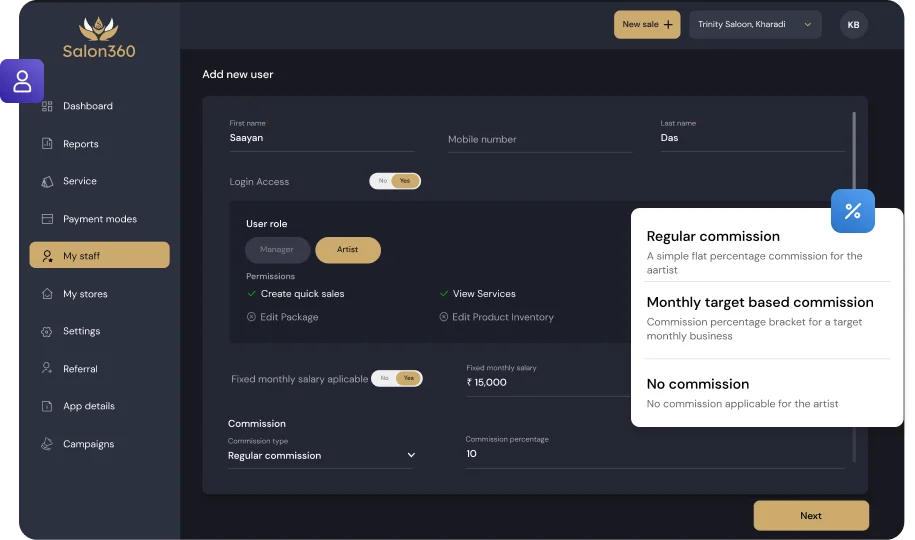
Salon management software has revolutionized the way salons handle their financial year-end reporting. These tools offer a range of features that streamline processes and enhance accuracy.
One of the most significant advantages is automation. Salon management software automatically compiles financial data, reducing the risk of human error. This ensures more reliable reports, which are crucial for audits and tax compliance.
Moreover, these software solutions offer real-time data access. Real-time insights enable salon owners to make informed decisions quickly. This agility is particularly beneficial in a dynamic market where conditions can change rapidly.
Another feature is integration with other systems, such as inventory and appointment scheduling. This integration provides a comprehensive view of the salon’s operations. It also helps in efficiently managing resources and improving customer satisfaction.
Customizable templates are another highlight. These templates allow salons to generate specific reports tailored to their unique needs. This flexibility ensures that owners focus on metrics that matter most to their business.
Beyond these features, software-based reporting supports scalability. As salons grow, the software can handle increased data volume without significant additional costs. This scalability is essential for businesses planning for expansion.
In summary, salon management software offers enhanced accuracy, real-time insights, and comprehensive integrations. It is a robust solution for salons seeking efficiency and growth.
- Automation reduces errors
- Real-time data access
- Integration with other systems
- Customizable reporting templates
Comparing Manual vs Software-Based Reporting
When deciding between manual and software-based salon reporting, several factors come into play. Each method has its distinct advantages and limitations.
Manual reporting relies on spreadsheets and paper records. This approach is straightforward but labor-intensive. It may initially seem more cost-effective due to lower upfront expenses.
However, manual methods are prone to errors and time-consuming processes. Correcting these inaccuracies can be costly and frustrating. It may divert attention from other critical business activities.
In contrast, software-based reporting offers automation and accuracy. It minimizes human error and provides reliable results quickly. The initial investment may be higher, but long-term efficiencies pay off.
Software solutions also offer advanced features like real-time analytics and integration. These enable deeper insights and seamless management. Adaptation to a growing business becomes significantly easier.
Key differences between the two approaches include:
- Efficiency: Software speeds up processes.
- Accuracy: Automation reduces errors.
- Cost: Manual is cheaper upfront; software pays off over time.
- Scalability: Software adapts to growth seamlessly.
Choosing between manual and software methods should consider salon size and needs. Weighing these factors can lead to smarter business decisions.
Key Reports for Year-End Success
Year-end success hinges on insightful financial analyses. For salons, targeted reports provide clarity and direction. These reports form the backbone of informed decision-making.
Firstly, a detailed financial statement is crucial. This includes income, expenses, and net profit, laying bare the salon’s fiscal health. Understanding these numbers informs strategic budgeting and investment.
Another essential report is the sales performance analysis. This report breaks down service and product sales, pinpointing top performers. It assists in refining marketing strategies and inventory management.
Customer retention reports reveal loyalty and satisfaction trends. By examining repeat customer visits and feedback, salons can enhance their client experience. This data supports targeted loyalty programs and service improvements.
Staff productivity reports are equally vital. These provide insights into employee performance, identifying strengths and training needs. Optimizing staff efficiency can significantly boost overall operational effectiveness.
Key reports to focus on include:
- Financial statements: Income, expenses, profit
- Sales performance: Service/product breakdown
- Customer retention: Loyalty, satisfaction trends
- Staff productivity: Performance insights
Each report delivers actionable data, empowering salon owners to optimize and thrive.
The Role of Analytics Software and Dashboards
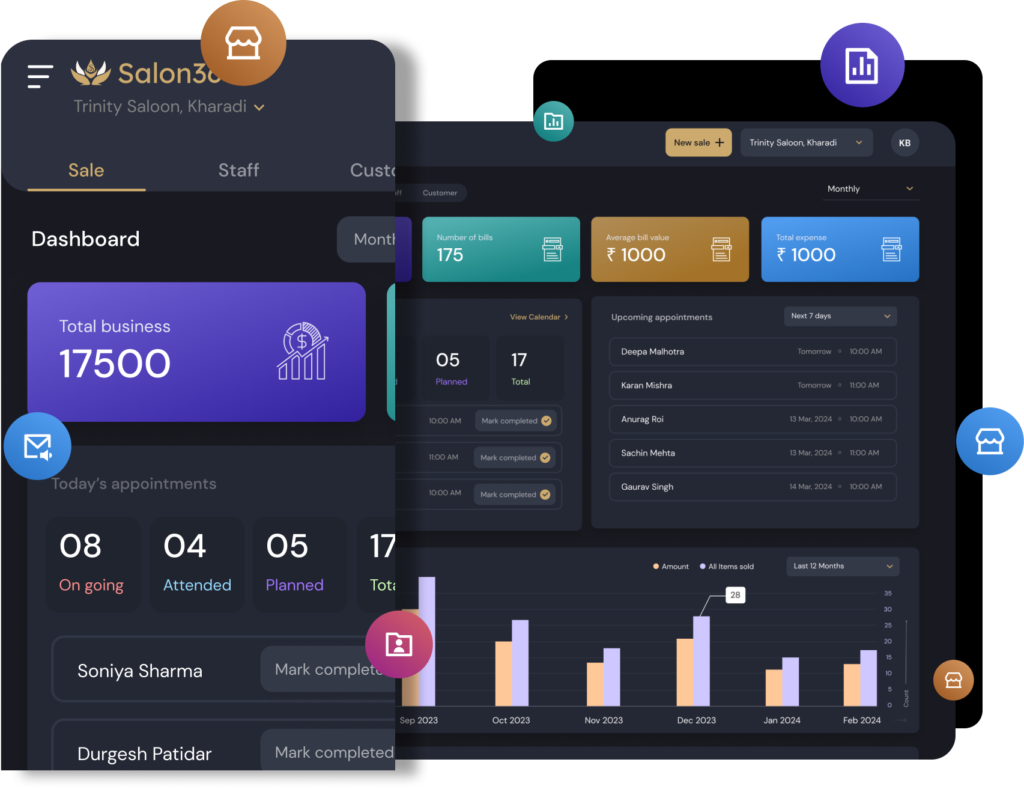
Analytics software and dashboards are game changers in salon management. They translate raw data into insightful visual summaries. This clarity helps salon owners swiftly assess business health.
Dashboards centralize key metrics like sales, appointments, and customer feedback. This integration simplifies tracking and analysis, allowing for quick adjustments. Such insights enable proactive decision-making.
Analytics software delves deeper with predictive capabilities. It identifies emerging trends and customer behaviors. This foresight supports strategic planning and enhances customer engagement.
These tools also enhance efficiency. By automating data collection and presentation, they reduce manual labor. This frees up valuable time for focusing on growth initiatives.
Key benefits include:
- Centralized data: Sales, appointments, feedback
- Trend analysis: Predictive insights
- Time-saving: Automates data handling
By leveraging analytics software and dashboards, salons gain a competitive edge. These systems facilitate precise and informed business strategies.
Transitioning from Manual to Software-Based Reporting
Switching from manual to software-based reporting can seem daunting but offers numerous benefits. The transition involves careful planning and investment. However, the long-term gains in efficiency and accuracy are substantial.
Begin by assessing your salon’s specific needs. Identify key areas where automation could provide the greatest impact. This evaluation helps to select the most suitable software solution.
Next, ensure your team is on board. Provide thorough training to maximize the software’s potential. Staff buy-in is crucial for a smooth transition and ongoing success.
Integrate the software gradually to ease the learning curve. Start with basic features before delving into more complex functionalities. This staggered approach allows for adjustments and minimizes disruptions.
Key steps for a successful transition include:
- Needs assessment: Identify automation priorities
- Team training: Maximize software potential
- Gradual integration: Eases learning curve
Embracing software-based reporting enhances operations. It positions your salon for improved profitability and growth.
Making the Right Choice for Your Salon
Choosing between manual and software-based reporting depends on several factors. Consider your salon’s size, budget, and growth plans. Each option has unique advantages and challenges.
Analyze your current reporting challenges. If accuracy and time management are issues, software might offer significant improvements. Its ability to provide real-time data and analytics can transform operations.
It’s also crucial to factor in initial investment versus long-term benefits. While software might seem costly upfront, the savings in time and potential error reduction can justify the expense. Over time, these efficiencies can lead to increased profitability.
Here is a checklist to guide your decision:
- Evaluate needs: Determine current reporting challenges
- Cost analysis: Balance initial costs with potential savings
- Consider growth: Choose a scalable solution
Ultimately, the right choice will align with your salon’s goals. Whether you opt for manual or automated reporting, ensure it supports your vision for future success.